Which Christmas Tree Is Right for Your Home? Experts Break It Down
Consider this your shortcut to finding the perfect holiday centerpiece. Holiday decorating is supposed to be a joyous event, but picking the right tree can be surprisingly complicated. There’s a lo...
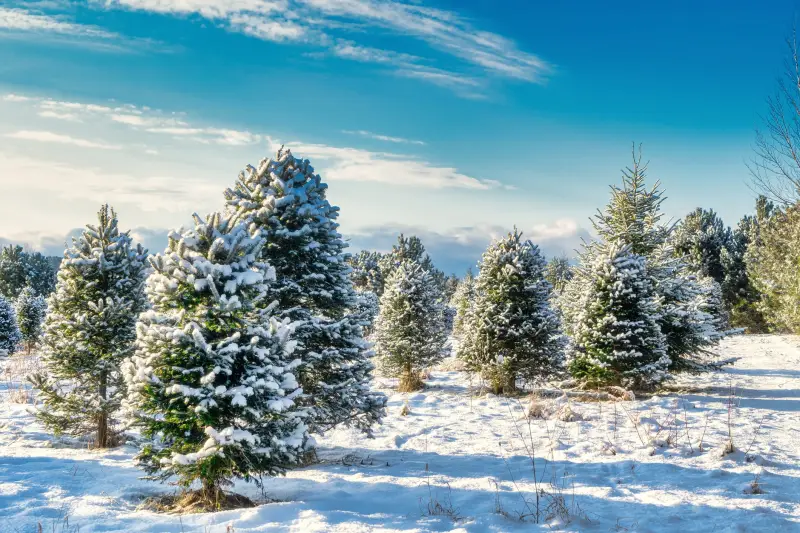
Consider this your shortcut to finding the perfect holiday centerpiece.
Holiday decorating is supposed to be a joyous event, but picking the right tree can be surprisingly complicated. There’s a lot of height, circumference, and branch density variation—some people like a full, fluffy look, while others opt for a more minimal tree—and don’t even entice us with the real versus faux debate.
The truth is, any tree can be beautiful in the right setting, so if you’re feeling unsure about which one fits your home, we’ve created the ultimate guide on which tree is right for your holiday centerpiece. Ahead, we're sharing the most popular types of Christmas trees for every household.
The Fraser fir is one of the most popular types of Christmas tree, especially for households east of the Rocky Mountains. Firs, in general, are some of the most common trees grown for the holiday season, says Ward Dilmore, founder of Petrus Landscaping in California. There's a good reason for this: They have a perfect balance of deep green color and even, stiff branching, he says, which makes them a breeze to decorate.
Canaan fir trees often get compared to Fraser and balsam firs, thanks to their similar growing patterns and branch density, but this variety has a major benefit above the rest: needle retention. It sheds less than other firs, which means less cleanup for you.
Often a home for many birds, including woodpeckers, the eastern white pine is fluffy and fast-growing. With foliage that's thin, delicate, and silvery-green, this tree is best paired with lightweight ornaments and minimal decorations.
A classic type of Christmas tree, the noble fir is native to the Cascade and Pacific Coast mountain ranges of the Northwestern United States. With strong branches, this tree ensures your precious family heirlooms won't be at risk of falling, and the long peak is ideal for an oversized tree topper.
The Arizona cypress is the most drought-tolerant evergreen out there—with the right care, this type of Christmas tree can last longer than other evergreens. With its thick, layered branches and lacy silver-blue foliage, this tree is a beautiful alternative to the silver fir.
Fast-growing and cone-like in shape, Leyland cypresses are more frequently used as privacy plantings rather than as Christmas trees. However, this richly colored cypress tree grows almost everywhere in the United States, except for the most northern parts of the Dakotas, Michigan, and Montana. If you have one in your yard, why not string lights on it?
You’ll find this bushy type of Christmas tree primarily in Southern states, according to the Real Christmas Tree Board. Thanks to its stout branches, it should have no problem holding up your heaviest ceramic ornaments. It also has a piney fragrance and keeps its needles well throughout the season, as long as you give it plenty of water to drink.
Also known as a red fir, these striking trees are one of the rarest types of Christmas trees, says horticulturist and botanical designer Nathan Heinrich. They're slow-growing, and only a few farmers and harvesters have permits in California and Oregon to harvest them in the wild each year, he explains. "The reason these trees make such perfect Christmas trees is because they have such perfectly spaced, open, elegant branches that make hanging ornaments and lights easy," Heinrich says.
Like Miracle on 34th Street and peppermint hot chocolate, the balsam fir is a holiday classic. It's also the most fragrant of all types of Christmas trees, according to the Real Christmas Tree Board. You can find these at Christmas tree farms in Canada, New England, the upper Great Lakes, and Pennsylvania, along with lots of retail locations east of the Rocky Mountains.
The Scotch pine often flies under the radar, but it's a designer-favorite Christmas tree choice, and it has great needle retention. "With vibrant green and durable needles that resist shedding, it's low maintenance," says New York designer Artem Kropovinsky of interior design studio Arsight. "Its robust branches accommodate even the heaviest ornaments, and its dense appearance gives rooms a fuller, festive look."
The trees you see in lots often have been pruned and sheared into the quintessential Christmas tree shape, explains Lisa Tadewaldt, an ISA-certified arborist and owner of Portland, Oregon–based Urban Forest Professionals. She recommends getting a permit and cutting a tree that's native to your area down in the forest. In the Pacific Northwest, her favorite tree in its natural form is a grand fir. "It is going to give more Charlie Brown vibes than Hallmark Christmas vibes, but it has a flat needle pattern that gives it an air of elegance that balances out the thinner, more homespun branching pattern," she says.
With its signature bluish needles, the robust blue spruce has a full, triangular shape, says Kropovinsky. "Apart from its signature color, this tree releases a fresh scent similar to frosty woodlands," he says. Bonus for pet owners: "Given the tree's pointed foliage, pets often steer clear of it."
With its flexible needles and twigs, the Eastern red cedar doesn't hold ornaments all that well. But don’t let that deter you! If your heart is set on this hardy juniper, it looks great draped with lights, says ISA-certified master arborist Blake Watkins, operations partner at Monster Tree Service.
The Douglas fir is a type of Christmas tree that is synonymous with the Pacific Northwest, but is available at holiday tree markets nationwide. It's also one of the more affordable types of Christmas trees you can find. "Dark green foliage and hanging needles make this tree gorgeous even without ornaments," Watkins says.
The concolor fir (also called the white fir) is the type of tree you'd like to sidle up next to with a mug of mulled wine. While many trees have pine scents, this one actually gives off a citrus aroma that has garnered it some devoted fans, according to the Michigan State University Extension. Looks-wise, its branches have long, silvery, bluish-green needles.
Meghan Shouse is House Beautiful's Digital Editor, and she's been with the team since September 2023. On top of being the magazine's go-to Waco expert, Meghan also touches on quite a few other verticals in the digital space, like hot news content featuring your favorite HGTV stars, home design inspiration, and the latest interior TikTok trends. However, her favorite pieces are the ones that start conversations, such as stories about resale value and whether or not the Solo cup is chic. Before becoming a home writer, Meghan worked in the fashion industry for two years, writing for Harper's Bazaar after graduating from Iowa State University with a bachelor's degree in apparel merchandising. When she's not interviewing interior designers about home trends, you can find Meghan reading a fictional thriller with her cat in her lap, planning themed parties, or strolling through flea markets searching for chunky candle holders and vintage bookends.
Blake Watkins is an ISA board-certified Master Arborist and an ASCA-registered Consulting Arborist located in Sacramento, CA. He is the National Director of Plant Health Care for Monster Tree Service and is the owner of Arborist Blake Watkins LLC.
We may earn commission from links on this page, but we only recommend products we back.
©2026 Hearst Magazine Media, Inc. All Rights Reserved.