7 Window Treatment Fixes Designers Swear By
You’d be hard-pressed to find a homeowner who complains about having too many windows, but not all windows are created equal. Maybe you’re saddled with a skinny one tucked in the corner of a bedroo...
You’d be hard-pressed to find a homeowner who complains about having too many windows, but not all windows are created equal. Maybe you’re saddled with a skinny one tucked in the corner of a bedroom, or an unusually shaped one in a bathroom. The right treatment can make even the most awkward window feel intentional—but the trick is knowing which solution works best for each situation.
Here, interior designers Paige Kelly and Lindsey Walsh share the window treatment fixes they turn to again and again, along with a few clever ideas you may not have considered.
1. Hang treatments higher to make ceilings feel taller

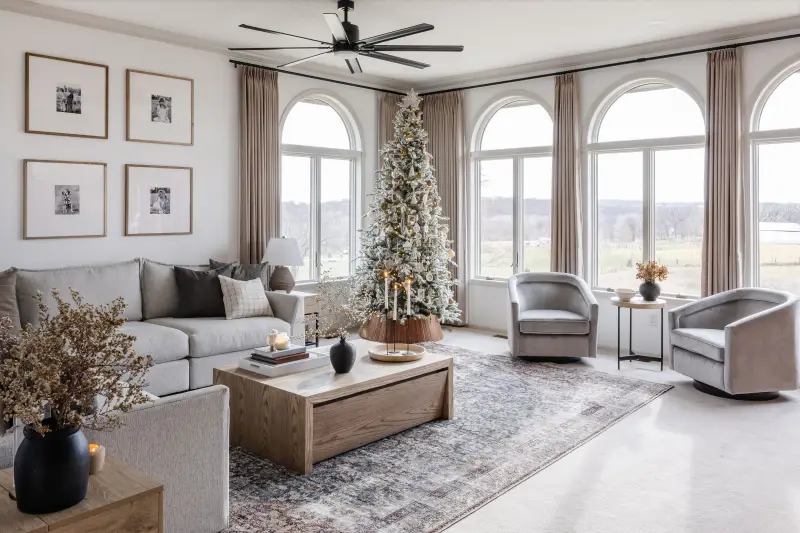
If a room is short on vertical space, Kelly recommends mounting your curtain rod a few inches from the top of the wall, rather than right above the window. “Getting the drapery high and wide is going to make a room feel bigger,” she says.
Tall panels draw the eye up, but make sure they are long enough to skim the floor. “Otherwise, they look like high-water pants, and it just looks wrong,” warns Walsh.
TWOPAGES Liz Linen Pleated Drapes are a full-length option with a tailored pleat that gives the finished look a little extra polish.
2. Play with pattern to blur awkward architecture
Walsh points to “pattern drenching” as a way to make a space feel more cohesive and help soften the edges of an oddly placed window or render an awkward proportion less noticeable. When you carry the same pattern across the walls and window treatments, the window becomes part of a larger visual composition rather than a feature that stands out for the wrong reasons.
Walsh notes that TWOPAGES can work with paper-backed fabric to allow the same material to cover both the walls and windows. A wallpaper installer can apply the fabric to the walls, and a window treatment workroom will install it as drapery or shades, carefully aligning the pattern repeat so the two applications meet seamlessly.
3. Extend the rod to balance a narrow window
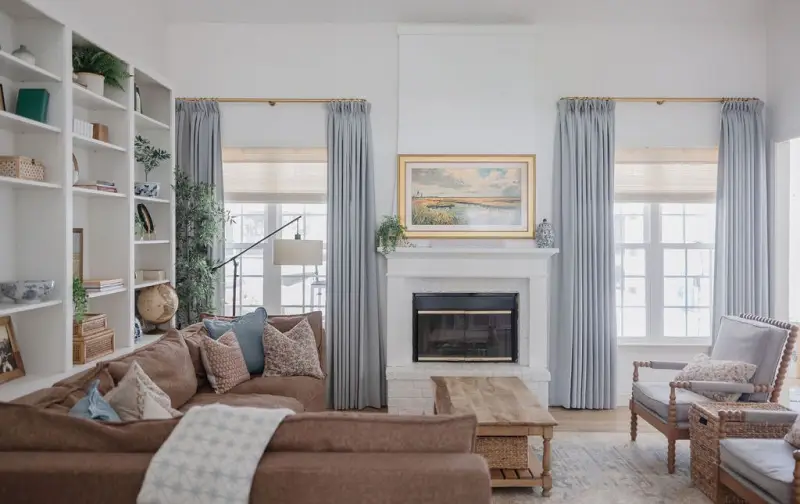
Increasing the fullness of drapery panels can trick the eye so that windows appear more substantial. “You can make yours look wider by using the stack back required for a wider window,” says Walsh. “The panel fabric may just be covering a lot of the wall, but it will look like there’s a window there.”
If the window placement is part of the problem, Kelly suggests extending the curtain rod beyond the window and using a one-way draw. “Gathering a drapery stack to one side feels intentional, and can help balance an off-center window,” she says.
4. Layer treatments for light and privacy

Combining shades and drapes lets you tailor the light and privacy to the room. In a bedroom, for instance, “you want a dual functioning system with a blackout layer and a sheer layer,” says Kelly. One blocks light for sleeping, while the other filters sunlight and provides privacy during the day. (For added convenience, opt for motorized blackout treatments that let you greet the morning sun with the touch of a button.)
In rooms where you don’t need full blackout, like kitchens and bathrooms, cafe curtains—which hang in the middle of a window along the check rail—are a great solution. “They cover your neighbor’s dirty yard but you still get to see the sky,” says Kelly. TWOPAGES also sells a variety of ready-to-hang cafe curtains, along with the necessary hardware in a gold or black finish.
5. Opt for shades when there’s no room for drapery

Long panels aren’t always practical, particularly when a window sits above a radiator, cabinetry, or a piece of furniture. In those situations, Walsh often turns to roman shades. They’re a streamlined way to introduce fabric and softness without taking up wall space.
For a more decorative look, Walsh loves adding a lambrequin, a fixed fabric-covered frame around the window, with a functional shade tucked beneath it. “It’s a great fix when the interior architecture gets in the way of having the kind of window treatment you want,” she says.
TWOPAGES carries a wide range of shade materials—from linen blends and embroidered cottons to bamboo and woven wood—and offers every fold and lift type possible, so you can find the exact form and function to best fit your space.
6. Use fabric to soften hard surfaces
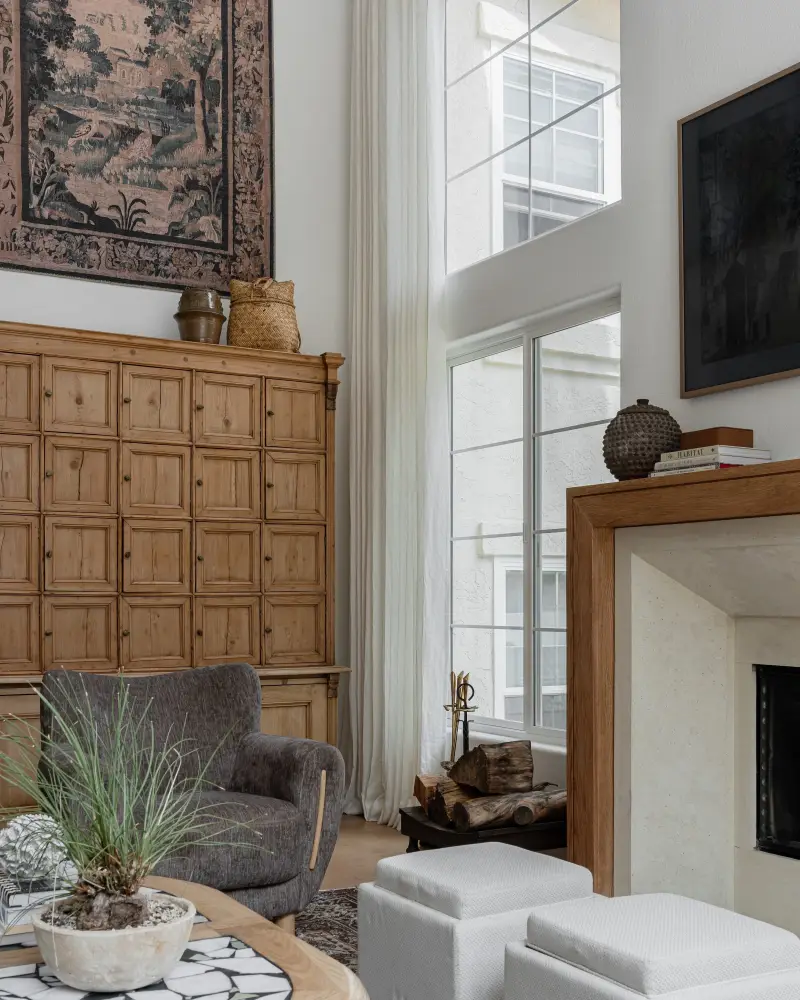
Walsh likes to use drapery beyond traditional windows, especially if a room feels stark or echoey because of finishes such as marble, glass, or tile. A portière—a curtain hung in a doorway or cased opening—can create a sense of separation between spaces, soften an entryway, or help buffer cold air near an exterior door.
“Even if they’re purely decorative, drapery and window treatments absorb sound and provide texture and visual interest,” adds Kelly.
The right fabric reinforces that effect. A lighter fabric like TWOPAGES Patti Belgian Flax Linen Curtain adds softness without feeling too heavy, while a drape with a more substantial texture, such as the brand’s Birkin Velvet Curtain, adds visual warmth and a richer feel, perfect for the colder months.
7. Upgrade the hardware for a more finished look
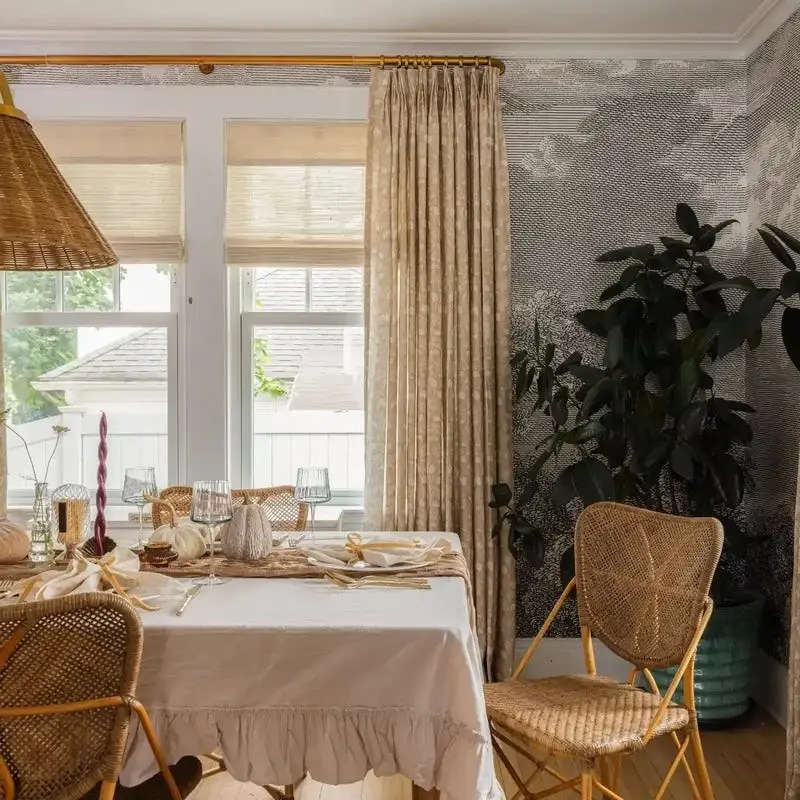
The smallest details can make the biggest difference, even if custom treatments are not in your budget. Instead of a traditional curtain rod with finials on each end, which can look dated, Walsh advises using a French return rod, which is mounted on the wall and curves outward. This allows the end of the panels to sit flush against the wall while still creating space for a stack back.
“A French return rod is by far the most elegant way to fake it and make your drapes look professional,” says Walsh. But stay away from grommets—“they are a dead giveaway you did it yourself,” she says—and use rings with clips instead.
Head to twopagescurtains.com for more ideas.