A Budget Pallet Privacy Screen That Also Holds Hot Tub Towels
Turn a sound wood pallet and inexpensive PVC into a portable privacy screen with hooks for towels and swim gear.
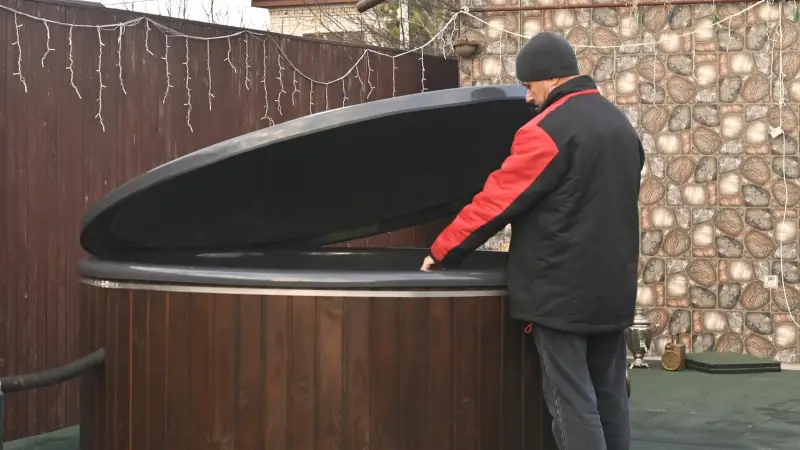
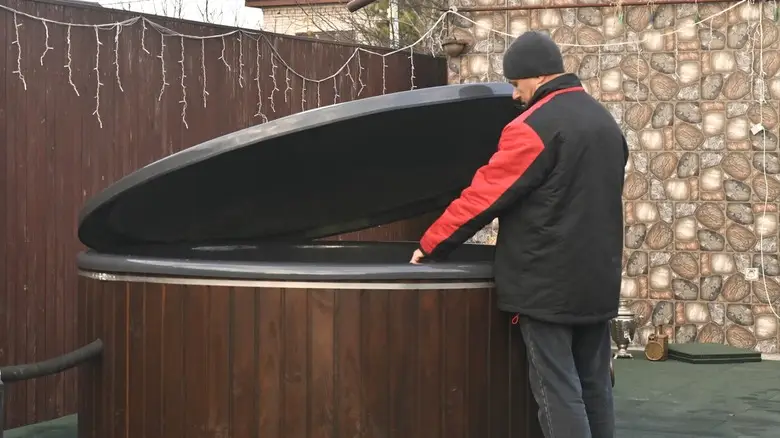
A hot tub feels more relaxing when you can use it without worrying about nearby sightlines. This portable screen pairs reclaimed pallet boards with a simple PVC stand, adding privacy and a handy place to hang towels and swim gear. The design is easy to adapt to the space, and the main cost is likely to be your time: the pallet can be free, while the PVC pipes and fittings are estimated at under $20 for one screen.
Build the screen around your space
The basic version uses a wood pallet, 1-inch PVC pipe, tee fittings, screws and hooks. The pallet provides the slatted wall; the PVC supports and feet let the screen stand on its own and move when needed. Hooks attached to the boards can hold towels, goggles and other outdoor swimming items.
Start with a pallet that’s in sound structural condition and has its deck boards intact. A common 48-by-40-inch pallet is one option, though larger pallets are available. Before choosing one, consider where the screen will stand and how much of the view it needs to block. A standard pallet may suit a compact patio or a spot beside a tub, while a more open yard could call for a larger screen or several sections.
Separate and space the boards
To make the slats, remove the pallet’s deck boards with a hammer and crowbar, taking care to preserve the wood. The boards are then screwed horizontally across two PVC supports, one on each side. Align their ends so the finished screen has a tidy edge, and use a spacer while placing each board to keep the gaps consistent.
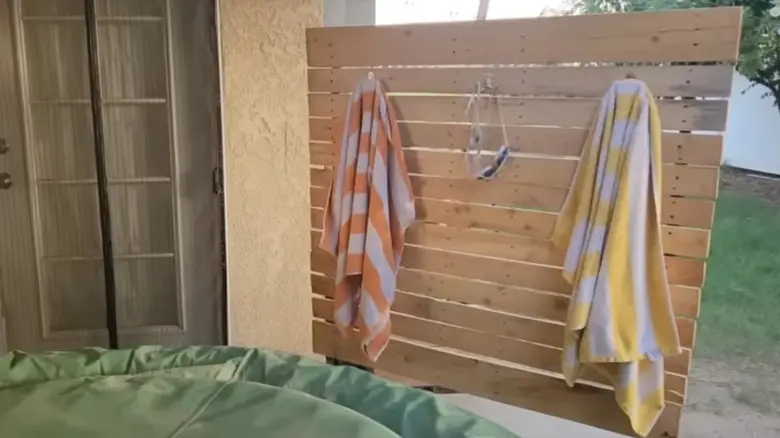
The spacing affects both privacy and the screen’s visual feel. Boards set close together, or nearly touching, block more of the view and may suit a hot tub close to neighboring homes. Where sightlines are less direct, a gap of about a quarter inch can let more light and air through while still giving some cover. The right spacing depends on the setting, so it helps to position the screen where it will be used and think through the views from nearby areas before fixing the boards in place.
Make a stable, movable base
Once the slatted panel is assembled, fit a PVC tee at the bottom of each support. Short PVC sections extending from the tees form T-shaped feet. These legs give the screen a freestanding base and make it portable, so you can adjust its position as the tub area or your needs change.
The available details don’t specify pipe lengths, screw sizes or a build time, so plan the supports and feet around the pallet you choose and the spot where the screen will sit. Keep the panel balanced on its base, and check that the feet sit evenly before hanging items from the hooks. Towels and swimming gear add convenience, but placing too much weight on one side could make a lightweight screen less steady.
Customize for more coverage
If one pallet doesn’t provide enough height or width, the design can be expanded with another set of PVC legs. You can also build multiple smaller screens and angle them to follow the shape of a patio or hot tub area. Separate sections are easier to arrange around corners and can be repositioned as needed.
The slatted panels can serve another purpose outdoors, too. Set up a pair of screens and stretch a sheet across them to create a surface for an outdoor movie. That added use makes the project more useful beyond hot tub time, while the same panels continue to provide cover around the tub.
Before starting, check that the pallet boards are intact and suitable for reuse, then decide how much privacy the site calls for. With a sturdy pallet, evenly spaced slats and a balanced PVC base, this modest build can add both a little seclusion and an orderly place for towels and swim gear.