9 Interior Trends Designers Are Officially Ditching in 2027
The end of the year is a great time to look back and reflect. When it comes to home design, there’s a lot to cover, from new trends to furniture collaboration drops to specific internet-breaking in...
The end of the year is a great time to look back and reflect. When it comes to home design, there’s a lot to cover, from new trends to furniture collaboration drops to specific internet-breaking interiors. One of our favorite things to do around this time is figure out what’s coming next in terms of interiors.
We love predicting what’s going to be hot in home design for the upcoming seasons; however, you can’t talk about what’s going to be “in” without also touching on what’s going to be “out.” We asked a handful of designers to share what design choices and interior trends they saw a lot of in 2026 that they’re more than happy to leave behind in 2027. Keep reading to find out the nine things they said.
One-Dimensional Lighting Schemes

We spend so much time making our interiors warm and reflective of our personalities, it would be a shame to ruin the look of these spaces by opting for one-dimensional lighting.
“It's time to move beyond relying on a single overhead fixture or wall-to-wall recessed lighting to illuminate an entire room,” designer Kristen Mendoza of Four Brothers Design + Build says. “Flat, overly bright lighting can make even the most beautifully designed spaces feel sterile and uninviting.”
Instead, incorporating layers of lighting to add dimension and create a warm atmosphere is much better for your home. Sconces, picture lights, table lamps, and thoughtfully placed accent lighting at various heights throughout the room, Mendoza adds, give a space a more intimate touch.
“I also recommend using warm 2700K light sources on dimmers to flatter people, highlight architectural details, and bring out the natural beauty of materials,” she explains. “Lighting should be considered early in the design and construction process, not treated as an afterthought.”
Too Much “Grandma Chic”

Part of the appeal of “grandma chic” decor is that it’s been collected over time. The pieces show their age, the interior is imperfect, and it’s very clearly reflective of the homeowner’s personality and life. However, “there is a difference between a room that feels ‘collected over time’ and one that feels inherited all at once,” designer Stephanie Kraus explains, and she’s tired of seeing this false presentation on display in people’s homes.
“Heavy Roman shades with lots of fabric, chintz on top of chintz on top of chintz, fringe on every edge, etc.,” she adds. “One of these details in a room can be charming, but if you use them all together, the room can start to feel like a period movie set.”
It’s often clear when this eccentric aesthetic is manufactured rather than effortless. Instead of trying to make the “ideal” interior in the span of a month, be patient and work on your home over a greater span of time. That way, the end product will look authentic.
Curved Sofas
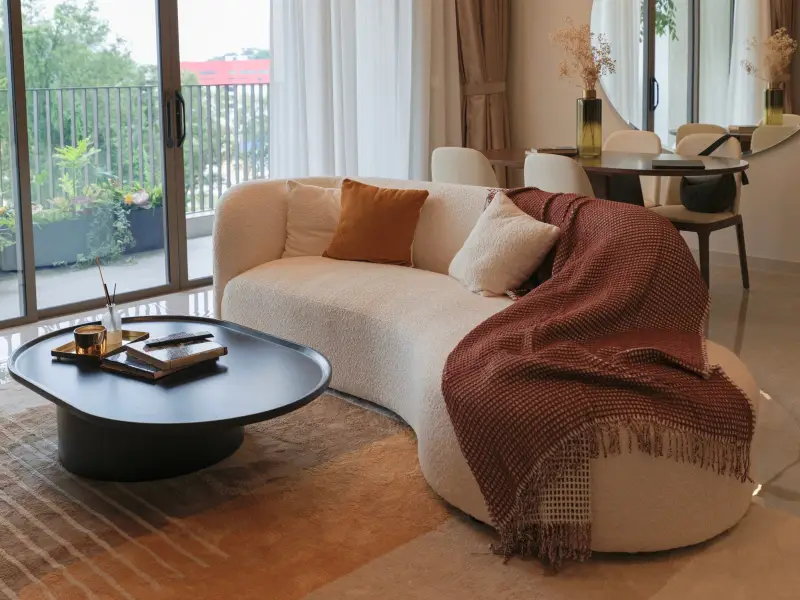
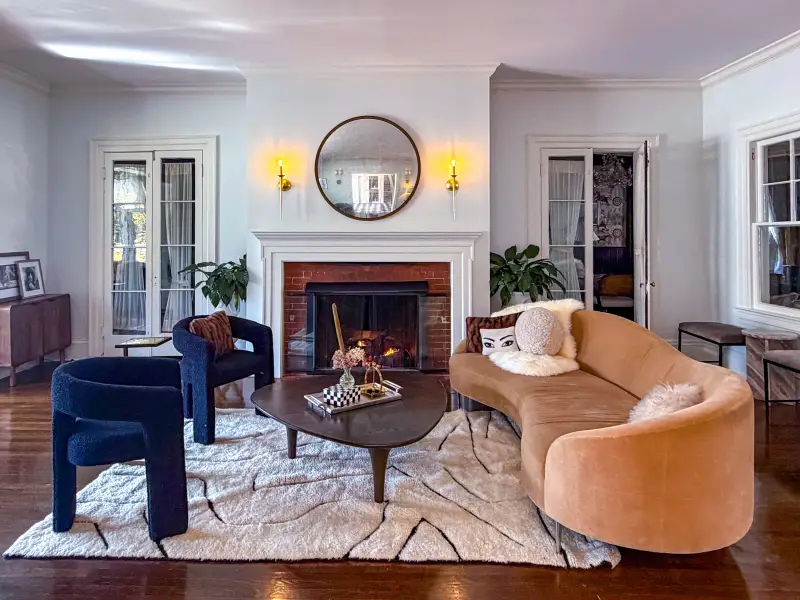
Though curved sofas are massively popular right now and look gorgeous in a photograph, Kraus is ready to leave them in 2026. “A curved sofa rarely seats more than two people comfortably,” she says. “Once guests settle in, everyone ends up sitting awkwardly, and conversation feels harder than it should.”
She’s all for a sofa or couch being something that invites people in to linger over conversations and stay late into the night, and a kidney-shaped seat isn’t going to do that.
Ruffled Edges
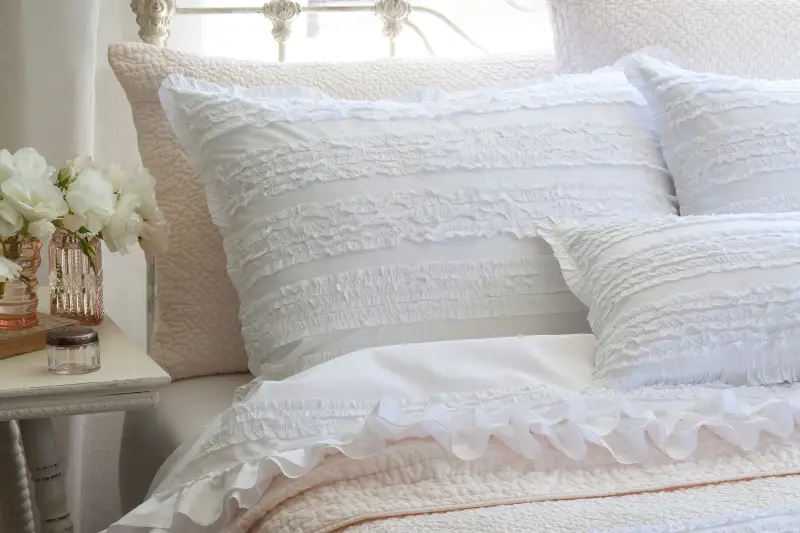
While designer Maggie Vollrath of Provision Studios loved seeing the return of decorative, playful details like ruffles and scalloped edges, she thinks we’ve gone a bit overboard in 2026. These touches are being applied to just about everything: upholstery, pillows, lampshades, bedding, furniture—the list could go on.
“These details can be incredibly charming, but when they're repeated throughout an entire room, they begin to lose the very character that makes them special,” she says.
Rather than treat every piece of a room with one of these details, Vollrath suggests opting for a scalloped lampshade or a beautifully tailored ruffled pillow instead to still capture that charm without drowning the space in them.
“Limiting these details to one or two thoughtful applications allows them to feel intentional rather than overly thematic,” she adds. “Sometimes, the most interesting interiors are as much about what you choose to leave out as what you include.”
Imitation Materials
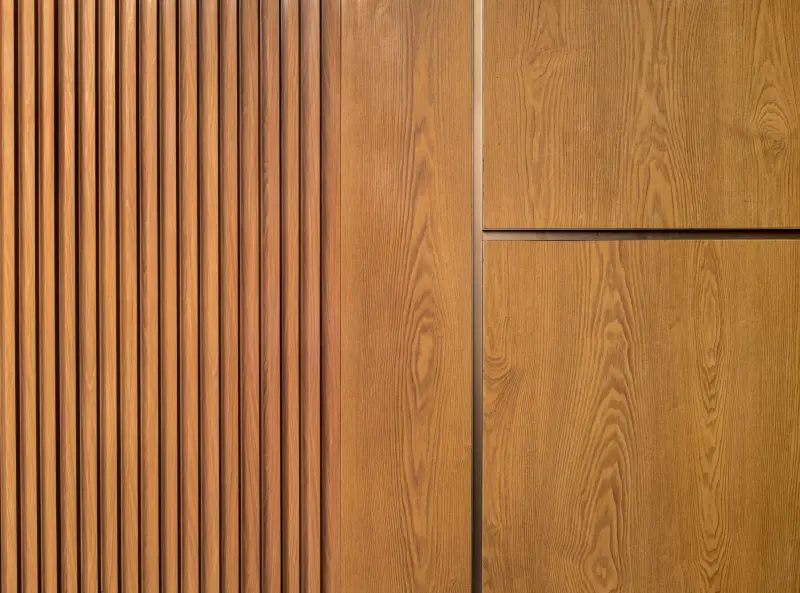
“I'd love to see us move away from selecting materials simply because they imitate the appearance of something more expensive,” Vollrath explains. This goes beyond marble-printed contact paper and burl wood veneer; the designer means on a larger scale, like mass-produced tile that’s made to replicate the imperfections of handmade zellige.


“Part of what makes authentic zellige so beautiful is the craftsmanship and natural variation that comes from its production,” she says. “When those qualities are artificially reproduced, I think we sometimes lose the very thing that made the original material special.”
She would rather see a greater appreciation for beautiful, honest materials at every price point, and if the exact thing a homeowner wants is out of budget, then her solution would be to pivot the idea altogether rather than find something cheaply made that looks like what they desire.
“A classic Carrara marble paired with beautifully considered cabinetry can create an incredibly sophisticated interior, even when something as dramatic as Calacatta Viola isn't within the budget,” Vollrath explains.
Trend Hopping

We could probably say this every year, but it bears repeating: Don’t solely follow trends! “Just because something is trending doesn't mean it's right for your home,” designer Drew Michael Scott of Lone Fox says. “Polka dots are having a moment right now, but they don't make sense in many homes, or dare I say, most homes.”
He suggests thinking of home trends as prompts that should get you to brainstorm new ideas for your space that actually fit your style. Take polka dots again. If you want to introduce a new pattern to your home, but you don’t particularly mesh with polka dots, try a stripe instead.
“If you try to force something you don't love into your home just because it's trending, you're going to drive yourself crazy,” he adds. Let’s leave this line of thinking back in 2026 once and for all.
Architectural Details Without Purpose

While we love a good built-in bookshelf and wooden ceiling beam, those types of architectural details don’t always make sense in every single home. In 2026, as personality-filled interiors became more popular for everyone, a lot of homeowners looked into adding this type of millwork to their spaces as a way to add more visual interest and texture.
“Decorative beams, arches, and elaborate millwork can feel forced when they don't make sense with the architecture of the home,” designer Dani Flax of Pearson Design Group argues. “I think there's a tendency to add these elements to make a space feel more interesting, but the result can actually take away from the architecture itself.”
A home in a modern farmhouse style, for example, would look a bit odd with an intricate ceiling medallion and excessive picture frame molding. Design your interior around the existing architecture and the style of your home, don’t incorporate these elements simply because they’re everywhere right now.
“Safe” Interiors

The next year is not about playing it safe with your interiors—designers are tired of the stark white home. While ubiquitous gray and white color schemes had their time, they can often make a home feel generic and devoid of character.
“In their place, we're embracing more intentional, tonal palettes and color drenching,” Mendoza says.
You can still have a mostly white house, of course, but take a little risk and mix in some pops of color and pattern here and there, or choose a beautiful neutral wood tone for your cabinetry instead of a bright white paint.
“Taking a considered color, whether it's a deep green, warm clay, or earthy mushroom, and carrying it across walls, trim, and cabinetry creates a cohesive, enveloping effect,” Mendoza adds. “The goal isn't necessarily to introduce more color, but to use it with greater confidence and purpose.”
Velvet Upholstery
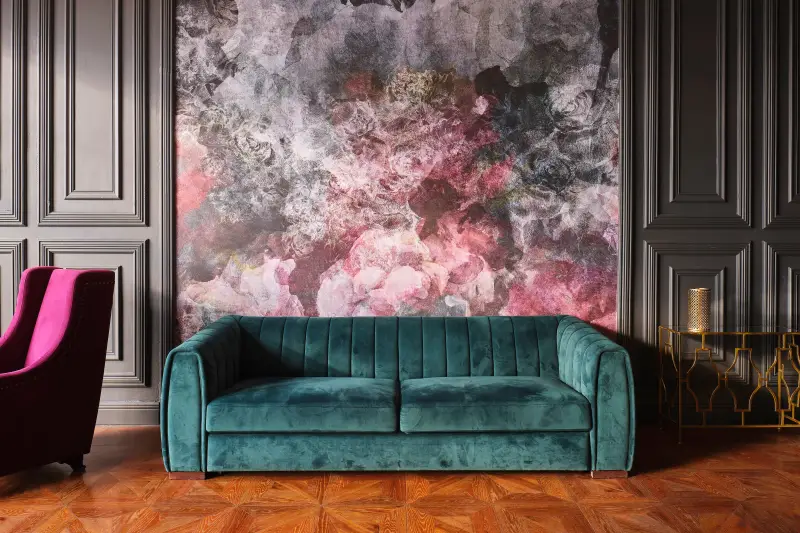
This is definitely a hot take, but designer John Maloney McNamara of Coosa Interiors is ready to leave velvet upholstery behind. “I’ve tried, but velvet almost always reads as either a 1990s prom limo or a hotel lobby trying very hard,” he explains. “The sheen shows every crush and bruise, and it ages into something that looks tired rather than loved.”
If you love the look of velvet, he suggests going with a mohair fabric instead, saying it has all of velvet’s depth and none of its shine. It also only gets better with age. And though he knows creamy bouclé has been overdone, Maloney McNamara thinks it deserves a reprise, but only in a rich color that can replace velvet still.