From the Archive: Ina Garten Tapped a Few Famous Friends for Her '90s Farmhouse Renovation
Archive Dive: Ina Garten’s Farmhouse in the HamptonsWelcome to Archive Dive—my new excuse to obsess over the absolute treasures hiding in House Beautiful’s 130-year-old archives. Every month, we’ll...

Archive Dive: Ina Garten’s Farmhouse in the Hamptons
Welcome to Archive Dive—my new excuse to obsess over the absolute treasures hiding in House Beautiful’s 130-year-old archives. Every month, we’ll dig up a favorite story from the past (epic room makeovers, wildly bold design swings, and style moments that were way ahead of their time) and talk about why they still resonate today. It’s part history lesson, part design deep-dive, and 100 percent a love letter to the iconic taste that’s defined HB for over a century.
—Jo Saltz, House Beautiful Editor in Chief
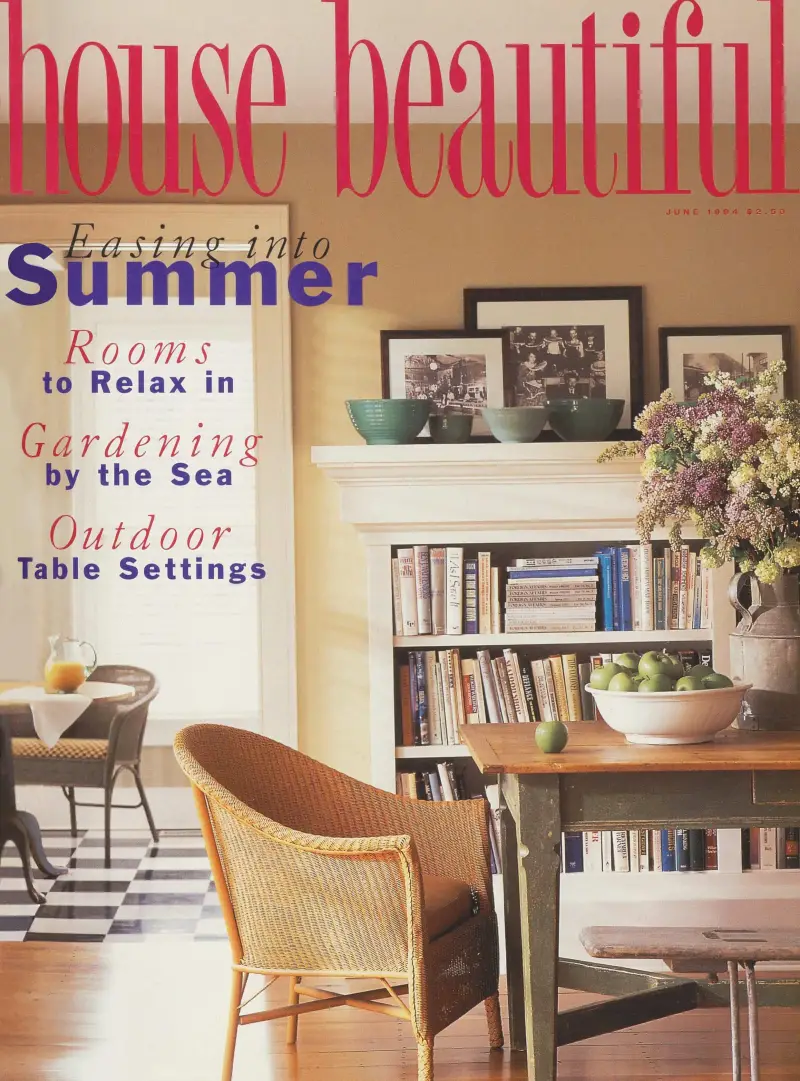
After Ina Garten moved the now-shuttered Barefoot Contessa specialty store from Westhampton to East Hampton, she and her husband, Jeffrey, decided to put down roots in the neighborhood. But rather than buy a new-build home, Garten transformed an old farmhouse into a light-filled, five-room retreat designed for hosting—and feeding—guests.
In our latest Archive Dive, we revisit the 1994 renovation, which includes Garten’s search for the right paint color, her no-nonsense decorating approach, and her love of the property’s grounds. She took each project in stride with help from famous friends like Martha Stewart and the late interior designer Robert Currie—and Jeffrey, of course. The result was a relaxed home with an entertaining-ready atmosphere and a garden that would make any green-thumbed foodie proud. Read on for the original story.
Story by Carol Prisant
The Barefoot Hostess
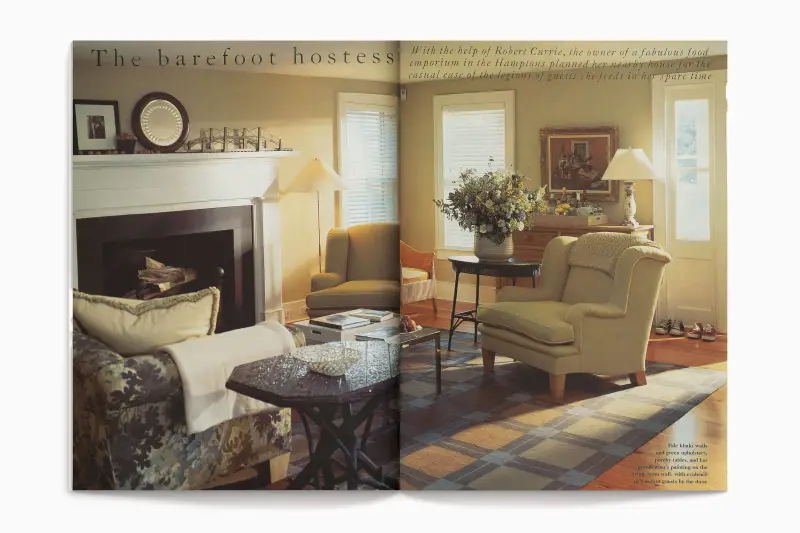
With the help of Robert Currie, the owner of a fabulous food emporium in the Hamptons planned her nearby house for the casual ease of the legions of guests she feeds in her spare time.
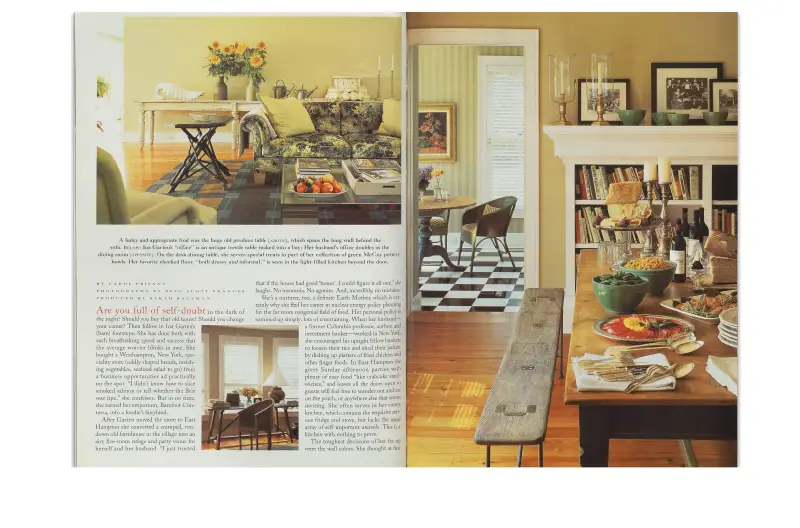
Are you full of self-doubt in the dark of the night? Should you buy that old house? Should you change your career? Then follow in Ina Garten’s (bare) footsteps. She has done both with such breathtaking speed and success that the average worrier blinks in awe. She bought a Westhampton, New York, specialty store (oddly shaped breads, ravishing vegetables, seafood salad to go) from a business opportunities ad practically on the spot.
“I didn’t know how to slice smoked salmon or tell whether the Brie was ripe,” she confesses. But in no time, she turned her emporium, Barefoot Contessa, into a foodie’s fairyland.
After Garten moved the store to East Hampton she converted a cramped, run-down old farmhouse in the village into an airy five-room refuge and party venue for herself and her husband. “I just trusted that if the house had good ‘bones,’ I could figure it all out,” she laughs. No insomnia. No agonies. And, incredibly, no mistakes.
She’s a nurturer, too, a definite Earth Mother, which is certainly why she fled her career in nuclear energy policy planning for the far more congenial field of food. Her personal policy is summed up simply: lots of entertaining.


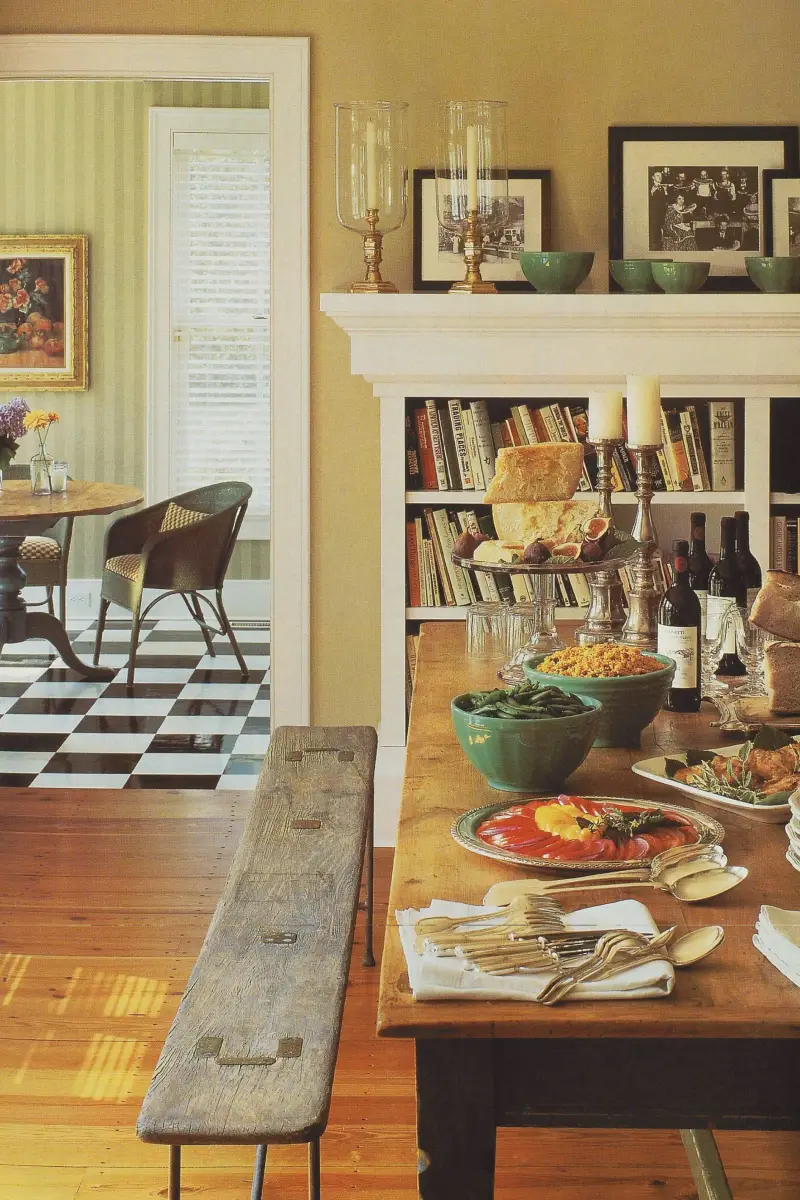
When her husband—a former Columbia professor, author, and investment banker—worked in New York, she encouraged his uptight fellow bankers to loosen their ties and shed their jackets by dishing up platters of fried chicken and other finger foods. In East Hampton she gives Sunday afternoon parties with plenty of easy food “like crabcake sandwiches,” and leaves all the doors open so guests will feel free to wander out and eat on the porch, or anywhere else that seems inviting.
She often serves in her sunny kitchen, which contains the requisite serious fridge and stove, but lacks the usual array of self-important utensils. This is a kitchen with nothing to prove.
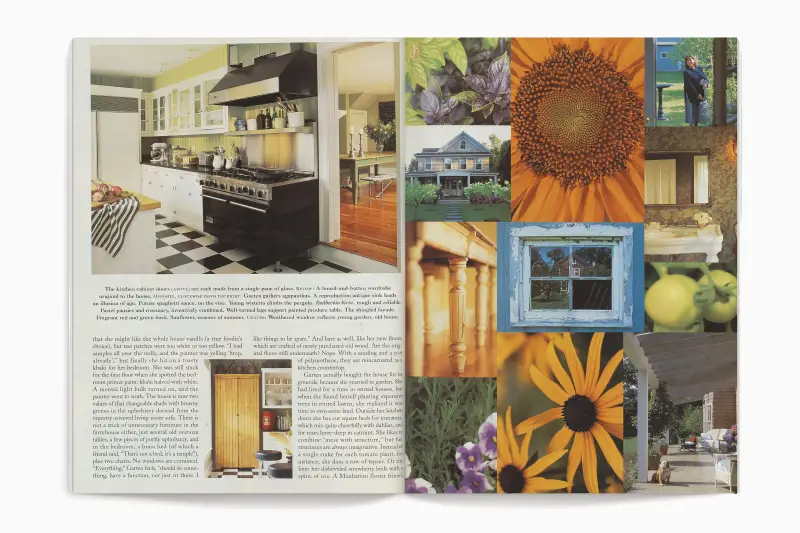
The toughest decisions of her fix-up were the wall colors. She thought at first that she might like the whole house vanilla (a true foodie’s choice), but test patches were too white or yellow.
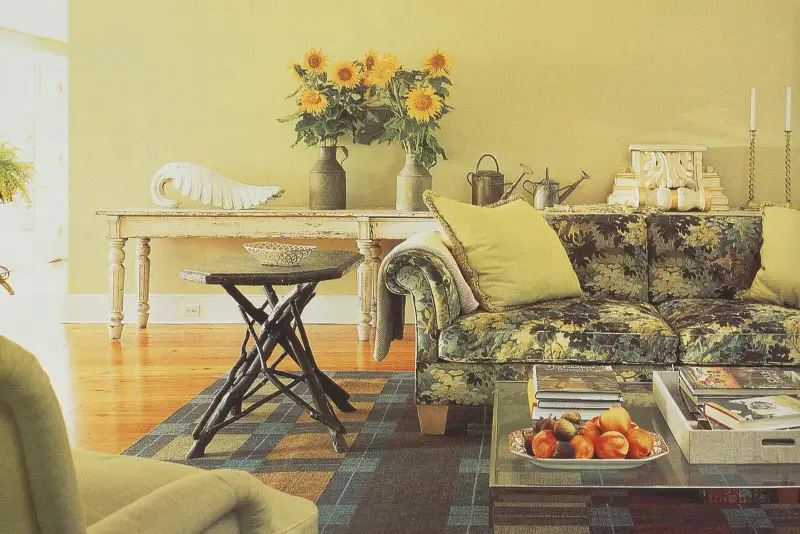
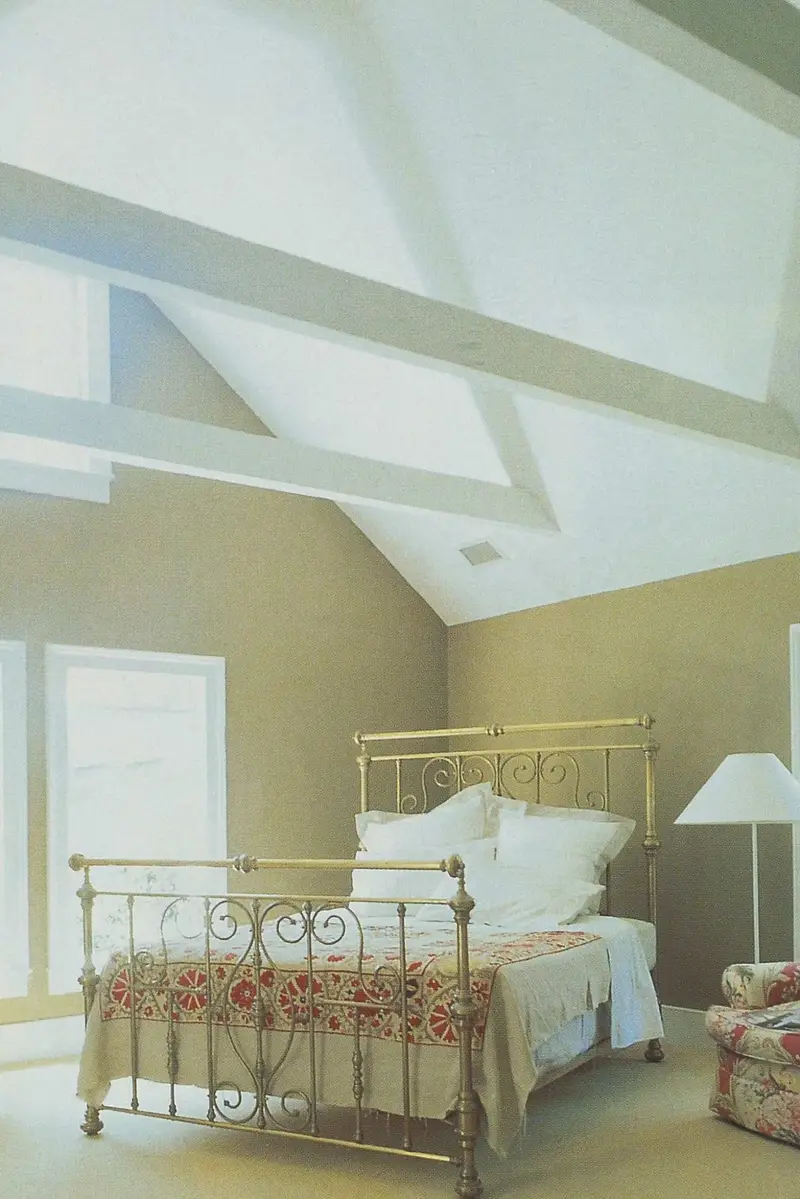
“I had samples all over the walls, and the painter was yelling ‘Stop already’,” but finally she hit on a toasty khaki for her bedroom. She was still stuck for the first floor when she spotted the bedroom primer paint: khaki halved with white. A mental lightbulb turned on, and the painter went to work. The house is now two values of that changeable shade with browny greens in the upholstery derived from the tapestry-covered living room sofa.
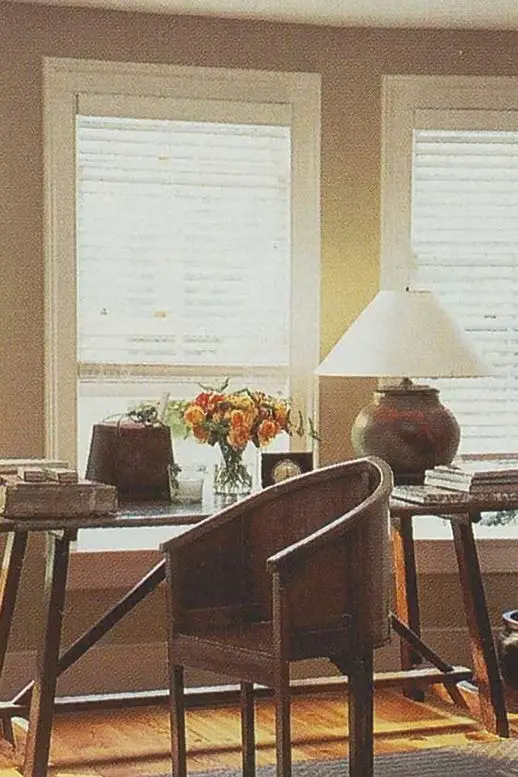
There is not a stick of unnecessary furniture in the farmhouse either, just several old oversize tables, a few pieces of portly upholstery, and in the bedroom, a brass bed (of which a friend said, “That’s not a bed, it’s a temple”), plus two chairs. No windows are curtained.
“Everything,” Garten feels, “should do something, have a function, not just sit there. I like things to be spare.” And bare as well, like her new floors, which are crafted of newly purchased old wood. Are the original floors still underneath? Nope. With a sanding and a coat of polyurethane, they are reincarnated as a kitchen countertop.
Garten actually bought the house for its grounds, because she yearned to garden. She had lived for a time in rented houses, but when she found herself planting expensive trees in rented lawns, she realized it was time to own some land.
Outside her kitchen doors she has cut square beds for tomatoes, which mix quite cheerfully with dahlias, and for roses knee-deep in catmint. She likes to combine “mess with structure,” but her structures are always imaginative. Instead of a single stake for each tomato plant, for instance, she does a row of tepees. Or she lines her disheveled strawberry beds with a spine of iris.
A Manhattan florist friend, Tom Pritchard of Pure Mädderlake, helped her with the garden design and did a very clever thing. He took two chairs out into the garden and walked around with her, scoping out the best seating spots. That’s how she decided which vistas to emphasize and which had too fine a view of the neighbor’s patio. Gardening has become a passion since she moved here. Every surface in her house is piled with well-thumbed horticultural tomes; for the time being, her food banks are relegated to the bottom of the pile.
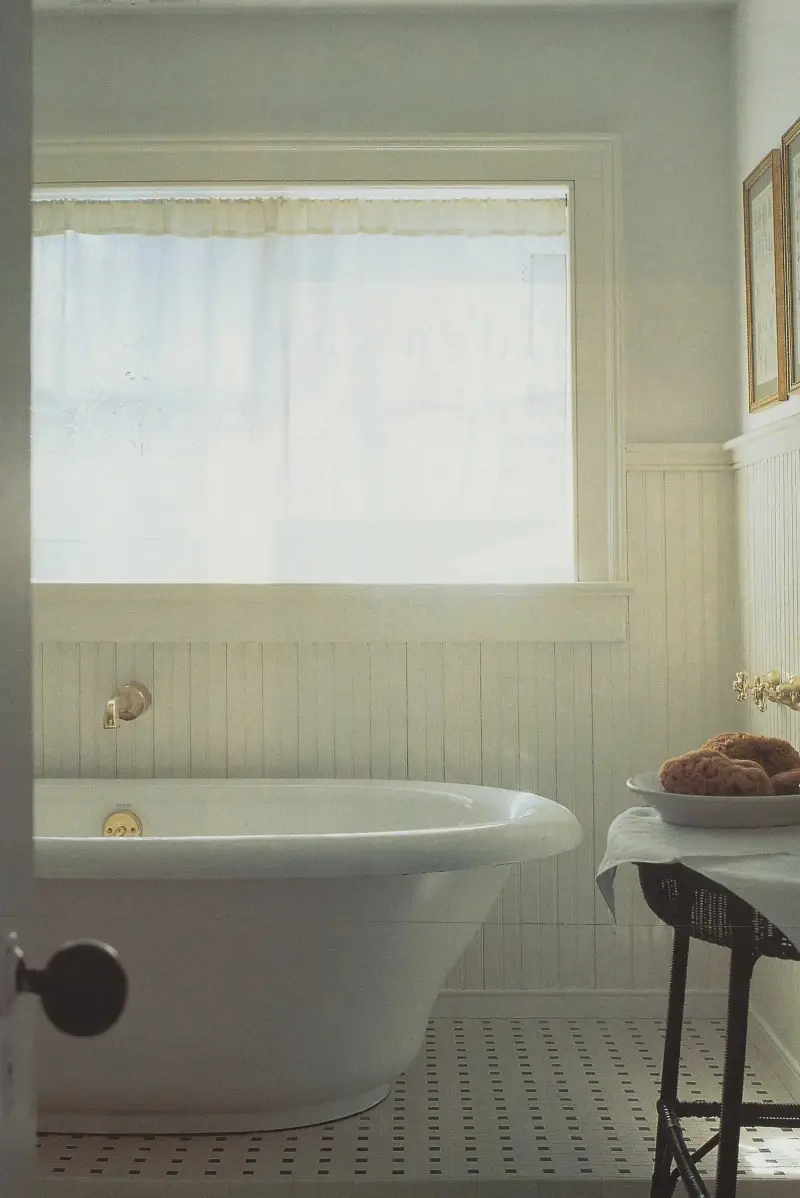
Garten acknowledges that she has had a lot of help. Her good friend, the late Robert Currie, designed all the seating, shopped with her, and arranged the furniture. He also taught her to avoid like mad “anything that was too trendy.” Stephen Scanniello, the rose dean at the Brooklyn Botanic Garden, chose a hundred great roses for her, and Martha Stewart passed judgment on her new shower stall. No less helpful was her very supportive husband.
But husbands don’t ponder that midnight ceiling with you. And talented friends aren’t around at 2 a.m., when the real bullets are bitten. Some lucky people, though, do it all with ease—Ina Garten for one. Warm and comfy, like her own new house, she just turns over and goes back to sleep.