Electric Wall Heaters Save Floor Space and Offer More Flexible Room Heating
Wall heaters free up floor space and can warm rooms quickly. Compare fan, infrared and micathermic options before choosing one.

Electric wall heaters can add warmth to a cold room while leaving more floor space available than a long baseboard unit. Their main advantage is placement: a heater mounted on or recessed into a wall takes up less room, though it still needs clear space around it for air to move safely.

They’re often used as supplemental heat when a home’s main system leaves certain rooms chilly. Some homes also rely on electric heaters throughout. Before choosing a wall unit, consider how quickly you want the room to warm, whether fan noise matters, how much area needs heat and whether the model plugs in or connects to household wiring.
How wall heaters deliver heat
Many wall heaters use a resistive coil to heat air. Cooler air enters through an opening near the bottom, warms as it passes the coil, then rises and exits near the top. That convection process is similar to the way many electric baseboard heaters work.
Some wall models add a fan to push warm air into the room. Moving the heat can make a space warm up sooner than it would with a heater that depends on natural air circulation alone. Fan assisted units may also offer different fan speeds, giving you another way to adjust how the warmth reaches the room. Keep in mind that a fan adds sound and moving parts.
Wall heaters typically use about 1,500 watts, the same amount cited for many baseboard units. Some models have an eco setting that draws less power. The actual setting and heat output depend on the model, so check the manufacturer’s information when comparing units.
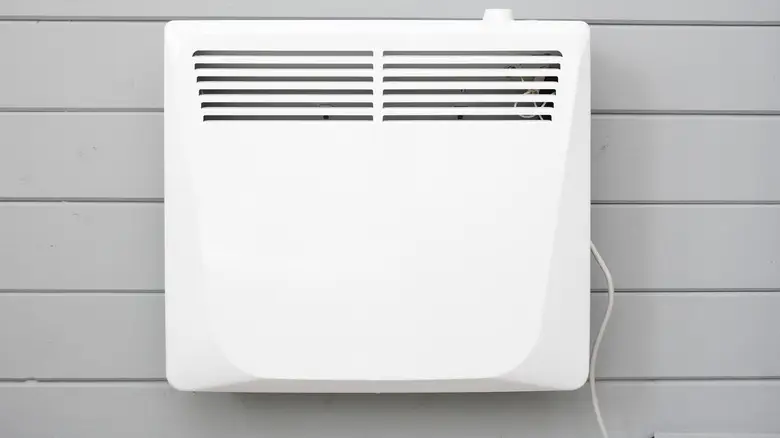
Choose a heater to suit the room
Convection models warm air, while infrared models send heat directly to solid objects and people in their path. Some units combine radiant and convective heat. Micathermic panels use an internal coil to heat a mica surface, which then emits infrared warmth while also helping heat circulate through the room.
That mix can suit a room where you want both direct warmth and warmer air. Micathermic heaters have no fan, so they operate quietly and don’t move air in the same way a fan assisted unit does. The surface can stay cool in some models, but that isn’t a guarantee for every heater; check the product’s instructions and keep children and pets away from hot equipment.
Heat from a wall heater is more focused than heat from a system that warms a larger area. A single unit may not be enough for a large room, so consider the room’s size and layout before settling on one. Furniture, doorways and other obstacles can affect how heat spreads. A heater’s location matters as much as its format: the unit needs an open path for airflow or radiant warmth to reach the room.
Plan the placement and installation
Wall heaters come as plug in units that hang on the wall, as well as models designed to sit inside a wall opening and connect to household wiring. A plug in unit can be simpler to install, while a recessed, hardwired model involves electrical work. Have a qualified professional handle wiring and installation where needed, and follow the manufacturer’s installation instructions for the specific heater.
Mounting a heater on the wall can reclaim the floor area occupied by a baseboard heater, which may make furniture arrangement easier. But a wall unit still needs clearance. Don’t place furniture in front of it, since that can block airflow and interfere with heating. The source guidance calls for about three feet of clearance to the side; check the heater’s own instructions for the required spacing around the unit.
Baseboard heaters also need open space: furniture can obstruct their air circulation, and curtains shouldn’t hang over them. Wall units avoid a heater stretching along several feet of wall, but they don’t remove the need to keep nearby materials and belongings at a safe distance. Their coils are generally enclosed in insulated housings, yet the unit and its surrounding area still need to be treated according to the manufacturer’s safety directions.
Weigh convenience against coverage
For a compact room or a chilly spot that needs extra warmth, a wall heater can be a practical way to preserve usable floor space. A fan model suits someone who values faster air movement and can live with fan noise. A micathermic or other radiant option may appeal when quiet operation and direct warmth are priorities.
There are tradeoffs. A focused heater may require more than one unit to warm a large room, and fan assisted models have moving parts that can wear sooner than simpler baseboard heaters. Compare the heating style, installation needs, controls and clearance instructions before choosing. The best fit is the one that warms the area you use while leaving the heater unobstructed and safely placed.