Dark Kitchen Cabinets Bring Warmth and Modern Style to the Home
Dark cabinetry, walnut, open shelving and layered lighting can give a kitchen a contemporary look that still feels warm and welcoming.

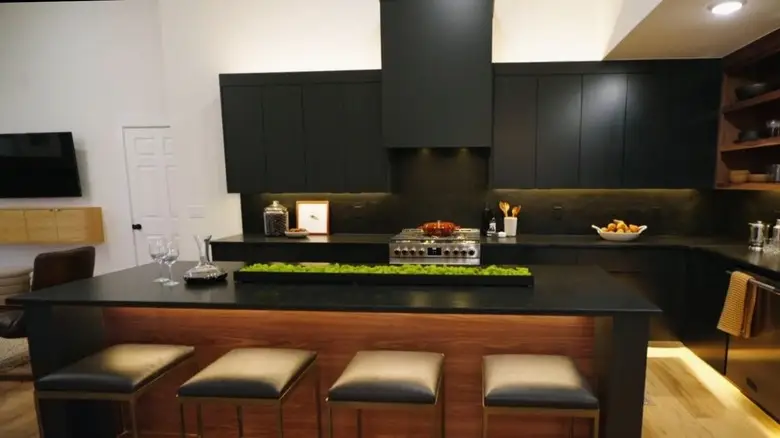
Dark cabinetry can make a modern kitchen feel more personal than an all-white scheme, especially when warm wood and thoughtful lighting soften the effect. In a renovation for first-time homeowner Jason, designers Dave and Jenny Marrs paired near-black cabinets with walnut, granite counters and a generous island to create a space suited to cooking and having family over.

The project appeared in Season 6, Episode 12 of Fixer To Fabulous. Jenny described the mix of dark-painted cabinetry and walnut as a way to make the room feel contemporary and inviting. The cabinet color was Farrow & Ball Off Black. Full-overlay doors gave the fronts a streamlined appearance while adding storage, and open shelving provided another place for everyday items.
That combination offers a useful lesson for homeowners considering a darker palette: the cabinet color can be bold while the rest of the room does practical work to keep the space comfortable. Walnut brings visible warmth; granite provides a durable-looking counter surface; and an island gives the kitchen a central work area and a place to sit. The result isn’t simply a dark room. It’s a balance of finishes, storage and open workspace.
Start with the way you use the kitchen
Before choosing paint or counters, consider what the kitchen needs to support. Jason enjoys cooking and hosting, so the design needed ample work surface and an accessible layout as well as a polished appearance. A large island helps anchor the room and can provide space for both preparation and seating. Clear counters and organized storage support a tidy look without requiring the kitchen to feel unused.
Full-overlay cabinet doors can contribute to that clean, continuous appearance, while offering storage behind the fronts. Open shelves create a different visual rhythm and keep selected items easy to reach. They work best when their contents are chosen with care: a few useful dishes or attractive objects can add character, while too many small items may make the room look busy. The design’s mix of closed cabinets and open shelving gives each approach a role.
Storage needs vary from home to home, so a layout that suits one cook may not suit another. Think through where ingredients, cookware and frequently used tools will go, then consider whether the island, cabinets and shelves make those items convenient to reach. A well-organized plan helps maintain the uncluttered impression that gives modern kitchens their calm, orderly feel.
Connect the counter and backsplash
Using the same material for the countertop and backsplash is one way to create a visual connection across the work area. The Marrs used this approach in Jason’s kitchen, and in another home featured two episodes later. Carrying one finish from counter to wall can reduce visual breaks and reinforce the room’s clean lines. It also gives a strong material more presence, so consider how its color and pattern will sit beside dark cabinets and warm wood.
A contrasting backsplash can make a different kind of statement. Patterned tile, for example, adds detail and can bring a lighter or more playful note to dark cabinetry. The choice depends on how much visual activity the room can comfortably hold. If the counters, cabinet color and wood grain already draw the eye, a quieter backsplash may help the design feel settled. If those larger surfaces are simple, patterned tile can add a distinct accent.
Plan lighting for work and atmosphere
A dark palette needs a lighting plan that serves more than one purpose. Bright overhead light helps when preparing food, while softer ambient light can make the room feel more relaxed around the island seating. In Jason’s kitchen, lighting near the cabinets and island helps support those different uses. The broader takeaway is practical: consider where you need clear visibility and where a gentler glow would make the room more inviting.
Metallic fixtures or cabinet hardware can also introduce contrast against dark paint. Industrial-style details offer another option, whether used for hardware or as a decorative accent. Keep the number and finish of these details in proportion to the rest of the room; a few coordinated touches can provide definition without distracting from the cabinet and counter materials.
Make the palette fit your space
Dark cabinets can feel especially appealing when the room also has warm materials, useful work surfaces and lighting suited to its daily routines. But the colors and finishes should respond to the kitchen itself. Look at how the existing light falls across the room and consider whether a chosen counter, backsplash and wood tone make the cabinet color feel balanced. Sample materials together where possible, since each finish affects how the others read.
For a restrained look, keep the palette close in tone and let texture do some of the work. To add more contrast, bring in a metallic fixture or a patterned tile. Either approach can preserve the contemporary feel; the key is to make each choice support the room’s use as well as its appearance. A dark kitchen works best when it has room to breathe, storage that keeps clutter in check and lighting that adapts from meal preparation to time spent around the island.