Insulate a Window AC for Winter With Custom XPS Foam Panels
Custom-cut XPS foam can cover an installed window AC’s side panels and help limit winter drafts. Measure each side, trim carefully and seal the edges.
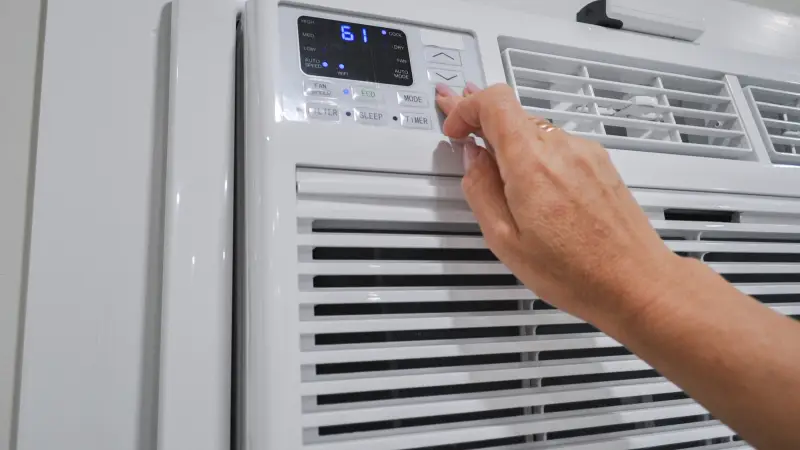
An installed window air conditioner can leave winter drafts coming through its accordion side panels and the gaps around the unit. Custom-cut rigid foam board offers a practical way to cover those side panels when taking the appliance out for the season isn’t feasible. It can be useful when a unit is heavy, secured in place or difficult to store.
Removing the air conditioner is preferable where that’s practical, but insulating around it can help address one source of heat loss. The approach focuses on the open spaces at the sides of the appliance; it doesn’t make the window or unit airtight. For other ways to limit drafts, see these ideas for reducing heat loss at home.
Why XPS foam board suits this job
Rigid foam board is commonly used as insulation in parts of a home such as walls and foundations. For a window AC, extruded polystyrene, or XPS, is a practical option: its closed-cell structure resists moisture, which can matter where condensation collects during winter. The board is also durable and can be cut to fit the spaces beside an appliance.
That custom fit is the main advantage over relying on the air conditioner’s accordion panels alone. A foam insert can cover each panel, with the edges adjusted to suit the actual opening. Since many units aren’t centered in their windows, measure each side separately instead of assuming the gaps are equal.
Gather the tools and measure each side
You’ll need XPS foam board, a tape measure, pencil, straight edge, sharp knife and tape. Duct tape can reinforce the cut edges and help seal around the AC. If you’re renting or the window has painted wooden frames, removable weatherstripping tape may be a better choice where tape meets the frame, since it can help avoid sticky residue when you remove the insulation in spring.
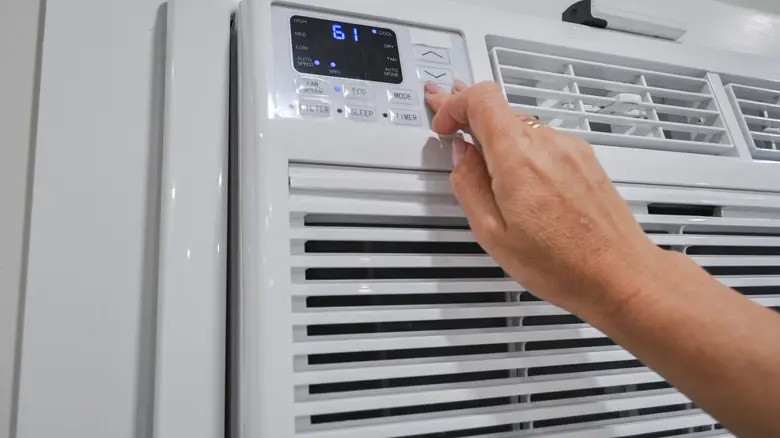
Measure the open area on each side of the AC independently. Transfer those dimensions to the foam board with a pencil, then use a straight edge to guide the knife through the marked lines. The board can be snapped along a cut and trimmed through any material that remains attached.
Trim for a snug fit
Set each piece over its corresponding accordion panel to check the fit. If an insert is too large, shave away a little foam at a time and test it again. This gradual trimming helps you avoid removing too much material and leaving a new gap. Aim for a snug fit over the side panels, with the piece sitting cleanly in the space around the unit.
Handle the sharp knife carefully while cutting, and keep the straight edge steady as a guide. The process doesn’t call for changes to the appliance or window; the panels are cut to fit the existing openings.
Reinforce the edges and seal the perimeter
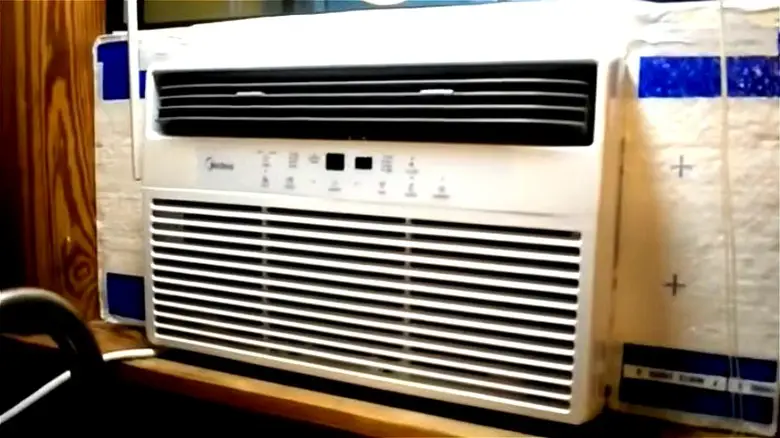
After the foam pieces fit, wrap their cut edges with duct tape. This helps keep the edges from crumbling with repeated use. Duct tape can also be applied around the air conditioner to improve the seal. Where it could contact a painted wooden frame or a renter’s window, consider removable weatherstripping tape instead so the spring cleanup is less likely to involve stubborn adhesive residue.
The side panels aren’t the only possible route for drafts. A fitted indoor air conditioner cover can provide another layer over the unit during winter. One example is the Frost King Window Air Conditioner Cover. It’s an additional measure to consider alongside covering the side panels.
For a project built around a specific window, careful measuring does most of the work. Check both sides, trim the foam in small increments, and choose tape with the window frame in mind. Those steps make it easier to fit the panels neatly now and remove them when warmer weather returns.